Capacity
Brisk walking, cycling or swimming can support cardiorespiratory fitness while remaining adaptable to schedule and weather.
Movement can be training, transport, play or a quiet return to the body. It does not need a stage.

Public health guidance for adults generally describes a mix of aerobic activity, muscle-strengthening work and regular breaks from sitting. The three cards below translate those ideas into everyday language. Each one can be pursued in a park, at home or in a gym, depending on what is available.
Brisk walking, cycling or swimming can support cardiorespiratory fitness while remaining adaptable to schedule and weather.
Squats, hinges, pushes, pulls and carries offer a vocabulary for building useful strength with appropriate technique.
Gentle, consistent ranges of motion can help you feel prepared for daily tasks, especially after long periods seated.
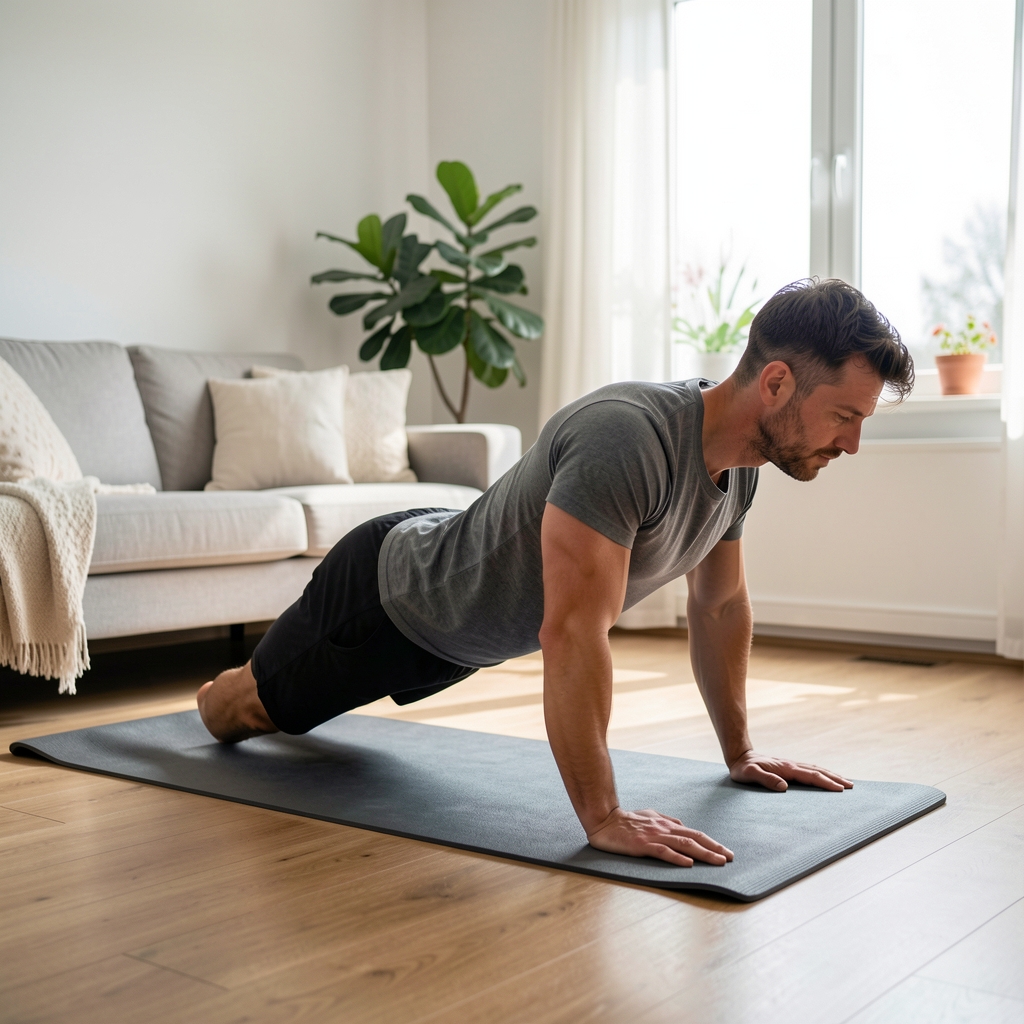
Choose an intensity that lets you repeat the practice with good form. Progress may mean a few more minutes, a slightly heavier load, a smoother range or simply a more regular appointment with movement.
Sharp pain, chest pressure, faintness or unusual breathlessness is a reason to stop and seek appropriate medical care. A qualified professional can help adapt activity to your history, injuries and goals.
Heat and humidity matter in Indonesia. Many people find that early morning or evening is more comfortable for outdoor activity, and drinking water before and after exercise is a sensible habit. If the weather feels too hot, an indoor option such as a home bodyweight session is a reasonable alternative.
The sample below is an illustration of how the three gears can fit around work and family, and it is not a prescription. Adjust days, durations and intensity to your circumstances, and discuss any significant change with a professional if you have a health condition.
| Day | Focus | An example | Perceived effort |
|---|---|---|---|
| Monday | Capacity | A 20-minute walk at a conversational pace | Light to moderate |
| Tuesday | Strength | Squats, rows and carries with light weight or body weight | Moderate |
| Wednesday | Mobility | 10 minutes of gentle stretching and a short walk | Light |
| Thursday | Capacity | Cycling or swimming for 20 to 30 minutes | Moderate |
| Friday | Strength | Push, pull and hinge movements with attention to form | Moderate |
| Saturday | Play | A longer walk, a game with friends or a family outing | Light to moderate |
| Sunday | Rest | Easy movement only, with time for sleep and meals | Very light |
Choose two or three short sessions per week. Focus on comfort, regularity and a simple record of what you did.
Add a few minutes to a walk or one more repetition to a strength set, only if recovery feels adequate.
Introduce a new activity or location to keep movement interesting and to work different muscles.
Look back over your notes. Decide what felt sustainable, what to adjust and whether to ask a professional for guidance.
The most useful kind of fitness is the kind that survives a busy month. A short walk repeated for a year says more about health than a dramatic programme abandoned in a week.
From the Willow editorial desk
No. Walking, bodyweight practice and simple household items can provide a useful routine. A gym can be convenient for some people, but it is optional.
A common guide is whether you can speak in short sentences during moderate effort, and whether you feel recovered by the next session. Sharp pain or lasting fatigue suggests that intensity should be reduced.
Gentle mobility work can feel good and help you move comfortably, but it is one part of a wider routine. Strength and regular activity contribute to how flexible and capable the body feels.
For related reading, see the sleep notes on recovery and the guide library for a walking guide.
If you have a health condition, take regular medicines or have not been active for some time, speak with a qualified professional before starting a new programme. Willow provides general information only.
Read the health notice