Reduce friction
Prepare one meal, shorten one commitment or move a recurring task out of the most crowded part of the day.
A grounded look at pressure, boundaries, breathing, attention and the relationships that make coping less solitary.
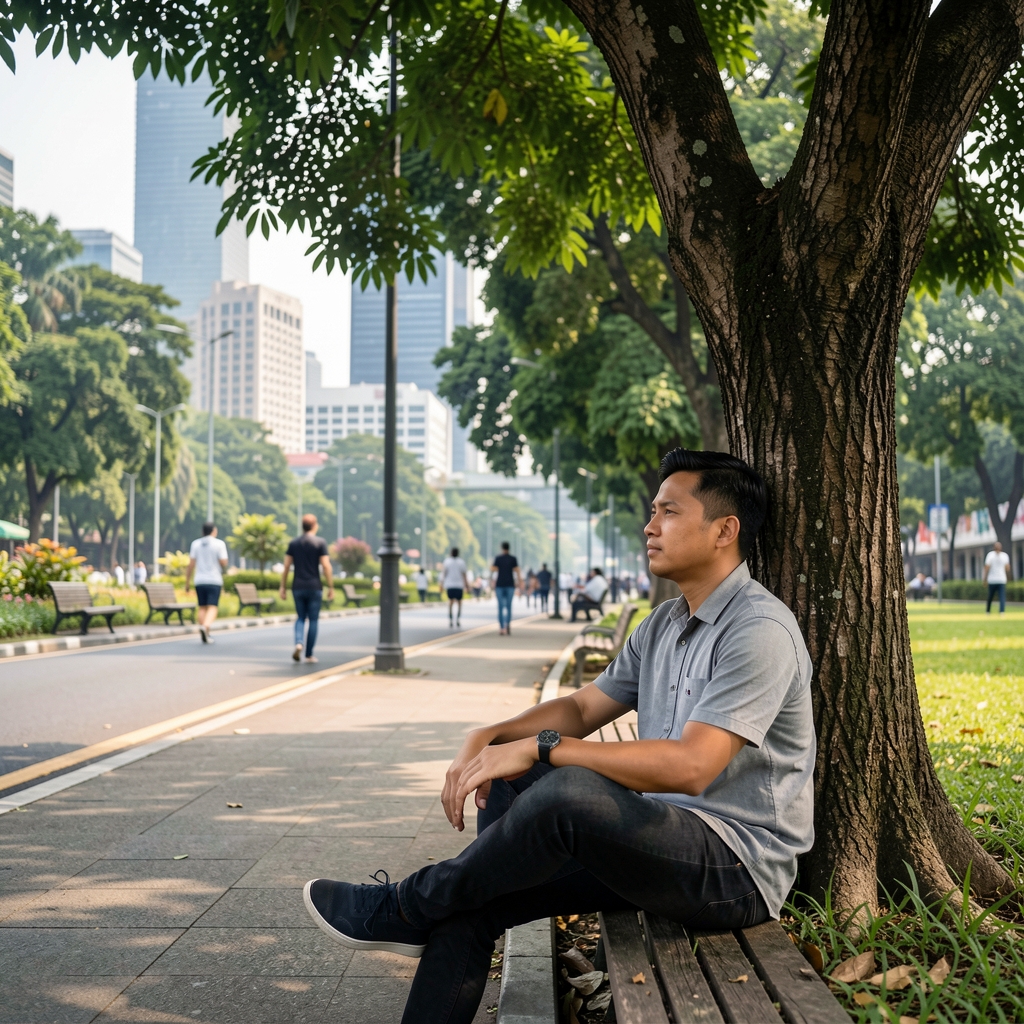
Stress can change sleep, digestion, concentration, irritability and the urge to withdraw. Noticing a pattern is not a diagnosis; it is information that may help you choose a next step.
Pressure is a normal part of working life, caring for family and living in a busy city such as Jakarta. The question is rarely whether stress exists, but whether there is enough recovery between demands. When the gaps disappear, even small tasks can feel heavy, and that feeling is a signal about workload and rest rather than a verdict on character.
Prepare one meal, shorten one commitment or move a recurring task out of the most crowded part of the day.
Short walks, slow breathing and device-free transitions can create a small gap between demand and response.
Tell a trusted person what support would look like, using specific requests rather than general apologies.
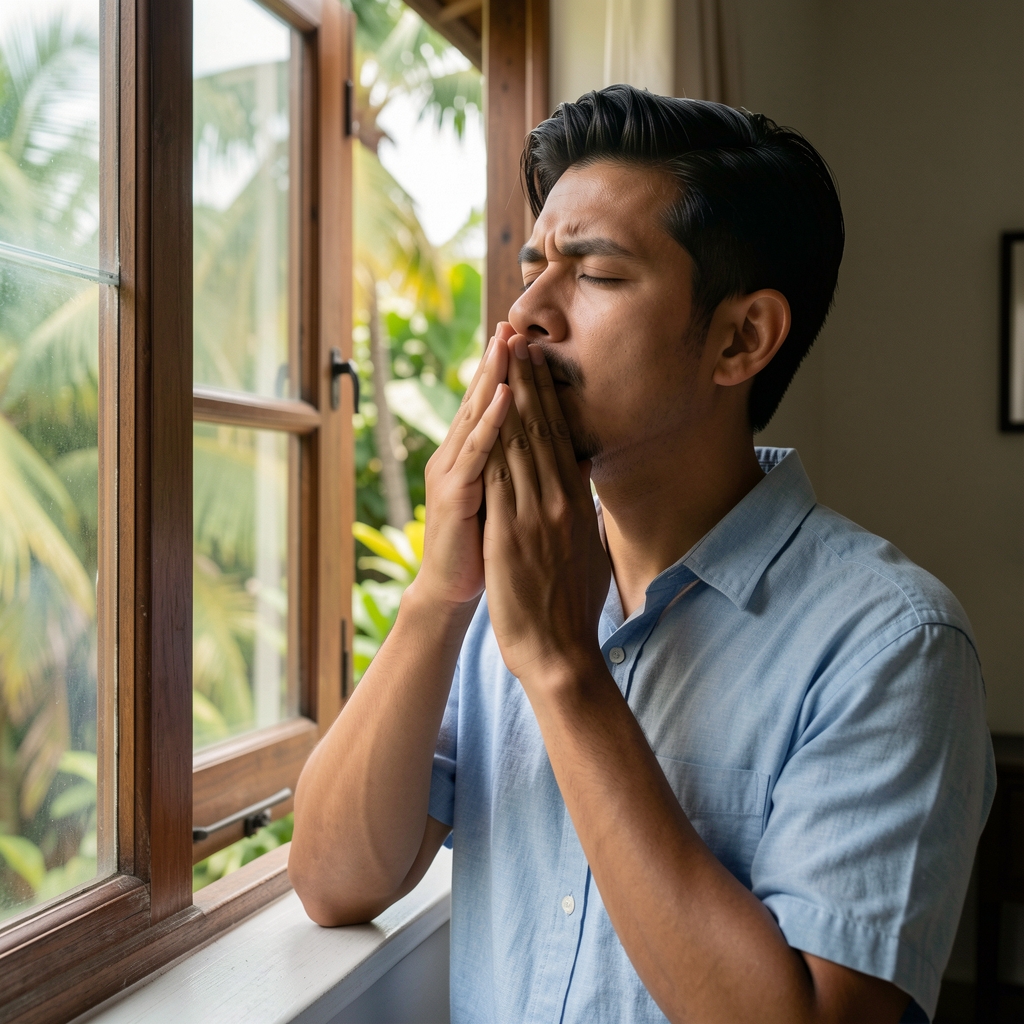
Persistent hopelessness, panic, thoughts of self-harm or an inability to function require timely professional help. Contact local emergency services or a qualified mental-health provider if safety is at risk.
For ordinary overload, start with one honest conversation and one practical boundary. A boundary can be as modest as agreeing not to answer messages after a certain hour, or asking a colleague to share a recurring task for a few weeks.
In Indonesia, community health centres (Puskesmas) and many hospitals offer mental-health services, and some employers provide counselling through staff benefits. Asking what is available is a practical step and not a sign of weakness.
This sequence is a general example of a short pause between tasks. It is not a treatment, and it can be adjusted or skipped if it does not feel comfortable.
Put down the task, relax the shoulders and notice where tension sits in the jaw, neck or hands without trying to change it.
Breathe in through the nose for a count of four and out for a count of six. Let the out-breath be gentle and unforced.
Look out of a window or at something distant. Moving the eyes away from a screen can ease a sense of being pressed in.
Decide on one small action, such as drinking water, standing up or sending a short message, and then return to the day.
The table pairs common experiences of pressure with small responses that readers often find manageable. The suggestions are general, and persistent or severe symptoms deserve a conversation with a professional.
| What you may notice | A possible small response | What to observe | When to seek advice |
|---|---|---|---|
| Difficulty falling asleep after a heavy day | A quiet hour with dim light and no work messages | Whether sleep onset changes over a week | If sleep trouble lasts for several weeks |
| Short temper with family or colleagues | A short walk or a few slow breaths before replying | Which situations bring on the feeling | If irritability feels out of control or affects relationships |
| Trouble concentrating | One task at a time, with a ten-minute break between tasks | Time of day when focus is strongest | If concentration problems persist or worsen |
| Skipping meals or eating quickly | A prepared simple meal and a fixed time to sit down | Energy levels in the afternoon | If appetite changes markedly for weeks |
| Urge to withdraw from friends | A short message or call with one trusted person | How you feel after the contact | If withdrawal continues or low mood deepens |
| Muscle tension in neck and shoulders | Gentle stretching and regular changes of position | Whether tension eases with movement | If pain is severe, sharp or spreads to the arm |
Resilience is often described as something a person has. It is closer to something a person has around them: rest, relationships, reasonable workloads and permission to say that today is difficult.
From the Willow editorial desk
Short periods of pressure can sharpen attention and motivation. The concern arises when demand continues without recovery, which is why rest and support are treated here as part of the picture.
No. Slow breathing is a general relaxation technique that many people find helpful for a moment of pressure. It does not replace assessment or support from a qualified mental-health provider.
Describe specific workload issues and propose one practical change, such as adjusted deadlines or shared tasks. Specific requests are usually easier for a manager to respond to than a general statement of being overwhelmed.
Contact local emergency services at 112, go to the nearest hospital emergency department or speak with a trusted person right away. Willow is an editorial publication and cannot provide crisis support.
Read about connection and support