Light
Seek outdoor light earlier and reduce bright, stimulating light close to bedtime when possible.
Sleep is a biological process, but the conditions around it are shaped by light, work, stress, timing and habit.
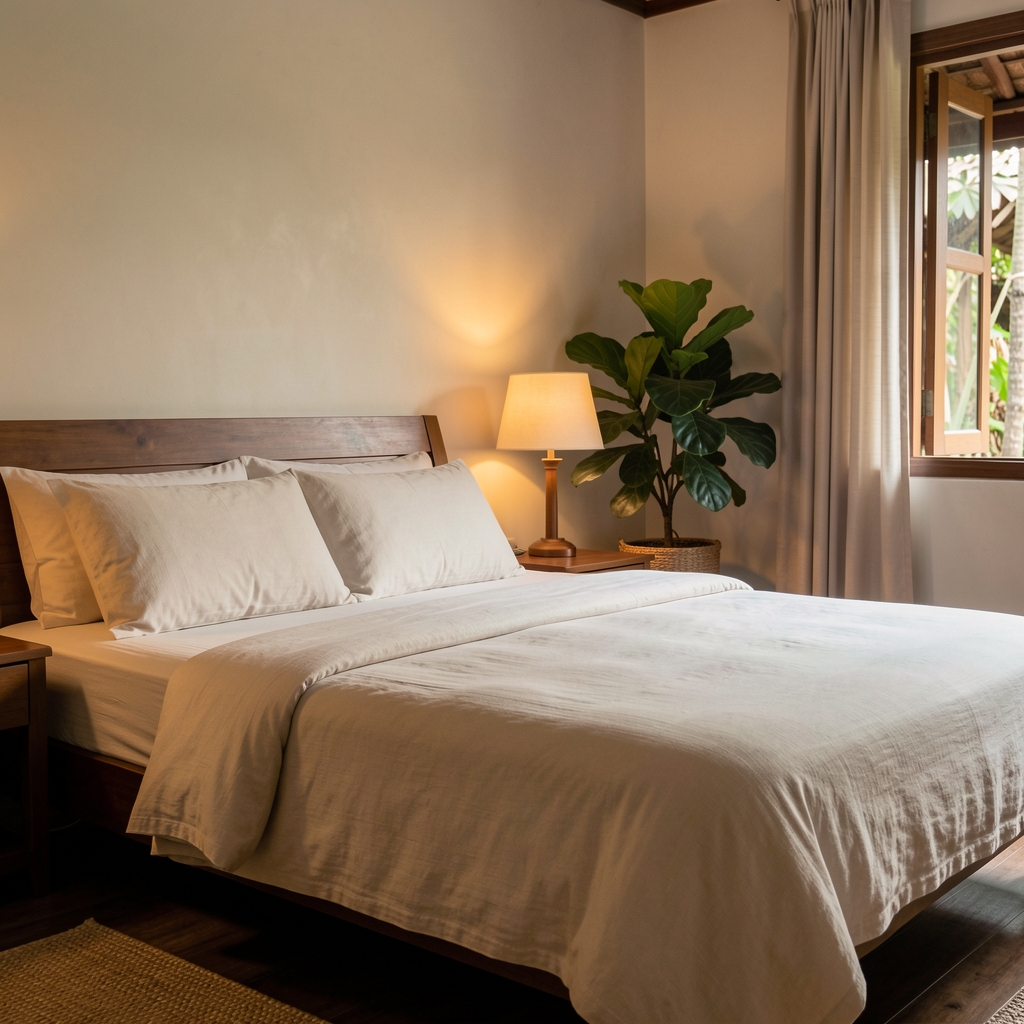
Start by observing when you feel sleepy, what keeps you alert and how consistent your waking time is. A calmer hour before bed, daylight earlier in the day and a bedroom that is cool, dark and quiet may support sleep for many people.
In a tropical climate, a warm and humid bedroom can make sleep harder. A fan, light bedding and ventilation can make a difference, and a shower earlier in the evening is something many people find comfortable. These are practical adjustments, not rules, and the right combination varies between homes.
Seek outdoor light earlier and reduce bright, stimulating light close to bedtime when possible.
A regular wake time can give the body a clearer anchor than chasing a perfect bedtime.
If worry keeps returning, write it down and consider discussing persistent insomnia with a clinician.
Loud snoring, pauses in breathing, restless legs, persistent daytime sleepiness or months of insomnia should not be reduced to a productivity problem. These patterns can have identifiable causes and deserve a professional conversation.
Willow offers context, not diagnosis. Keep a simple sleep diary if it helps you describe timing, awakenings and how you feel during the day.
Sleep clinics in larger Indonesian cities, as well as general practitioners and hospital outpatient departments, can arrange an assessment when needed. Bringing your diary to the first visit gives the clinician a clearer view than memory alone.

A diary can be copied onto paper or a notes app. Keep entries short, and complete the morning columns shortly after waking. The aim is to see patterns across a week, not to grade any single night.
| Night | Time to bed | Approximate wake time | Evening notes | How the morning felt |
|---|---|---|---|---|
| Night 1 | Write the time | Write the time | Light, meals, screens, mood | Rested, average or tired |
| Night 2 | Write the time | Write the time | Activity during the day | Rested, average or tired |
| Night 3 | Write the time | Write the time | Room temperature and noise | Rested, average or tired |
| Night 4 | Write the time | Write the time | Time of last meal | Rested, average or tired |
| Night 5 | Write the time | Write the time | Worries or planning | Rested, average or tired |
| Night 6 | Write the time | Write the time | Weekend or workday | Rested, average or tired |
| Night 7 | Write the time | Write the time | Anything unusual | Rested, average or tired |
At the end of the week, look for simple links: Did a later meal coincide with a restless night? Did a regular wake time make the morning easier? Note two observations and one question to explore next week.
The matrix suggests a gentle first step for several common experiences and indicates when a conversation with a professional is appropriate. It is not a diagnostic tool.
Sleep is not a performance to be optimised. It is a daily need that responds to how we live, and the most respectful approach is to notice the conditions around it before trying to change them.
From the Willow editorial desk
Many health agencies describe a range of roughly seven to nine hours for adults, though individual needs vary. How you feel during the day is also a useful signal.
A short nap can be refreshing for some people, while others find that it makes night sleep harder. If you nap, shorter and earlier in the afternoon is often more comfortable.
Some people find devices interesting, while others find that tracking increases worry. A paper diary is a simple alternative, and any device reading is best discussed with a professional rather than relied upon alone.
Willow does not recommend medicines or products for sleep. If you take medicines or are considering anything that affects sleep, speak with a doctor or pharmacist about what is suitable for you.
Read the stress notes